

ABA therapy jobs are growing faster than nearly any other healthcare occupation in the United States. In 2025, employers posted over 132,000 positions requiring BCBA certification alone, yet fewer than 84,000 certified BCBAs exist in the country. That gap is not closing; it is widening. Whether you hold an RBT credential or are eyeing a clinical director role, the numbers are clear: the ABA therapy job market overwhelmingly favors professionals at every level.
This guide breaks down every role in applied behavior analysis, what each one pays, where the jobs are, and how to position yourself in a field that the Bureau of Labor Statistics projects will grow 17% through 2034, roughly five times the national average.
Every ABA Therapy Role, Explained
The ABA field follows a clear credential ladder. Each step up requires more education and supervised experience, but it also unlocks significantly higher pay and clinical autonomy. As of April 2026, the Behavior Analyst Certification Board (BACB) reports over 342,000 certified ABA professionals across all levels.
| Role | Education | Certified (2026) | Salary Range |
|---|---|---|---|
| RBT | High school diploma + 40-hr training | 253,397 | $38,000 – $48,000 |
| BCaBA | Bachelor's degree + supervised hours | 5,223 | $39,000 – $47,000 |
| BCBA | Master's degree + supervised hours | 83,586 | $70,000 – $110,000+ |
| Clinical Director / BCBA-D | Doctoral or senior leadership | — | $95,000 – $150,000+ |
Registered Behavior Technician (RBT)
The RBT credential is the entry point into ABA therapy. RBTs deliver direct, one-on-one interventions under the supervision of a BCBA. The role requires a high school diploma, a 40-hour training program, a competency assessment, and a passing score on the RBT exam. With 253,397 certified RBTs as of April 2026, this is the largest credential group in the field. According to BLS data (2024), the median annual salary for RBTs falls around $42,000, though hourly rates in high-demand markets can reach $25 to $28.
Board Certified Assistant Behavior Analyst (BCaBA)
The BCaBA is a bachelor's-level credential that bridges the gap between direct care and independent clinical practice. BCaBAs assist BCBAs with treatment plan implementation, data analysis, and RBT supervision. Only 5,223 professionals hold this credential nationally, making it the smallest group on the ladder. Salaries typically range from $39,000 to $47,000 depending on region and employer.
Board Certified Behavior Analyst (BCBA)
BCBAs are the clinical backbone of ABA therapy. They design treatment plans, conduct functional behavior assessments, supervise RBTs and BCaBAs, and manage client progress. Earning BCBA certification requires a master's degree, 2,000 hours of supervised fieldwork, and passing the BCBA exam. The 83,586 certified BCBAs in the U.S. earn between $70,000 and $110,000 or more, with starting salaries for new BCBAs typically falling in the $62,000 to $75,000 range.
Clinical Director and BCBA-D
Senior leadership roles in ABA, including clinical directors and doctoral-level BCBA-Ds, oversee program quality, mentor clinical staff, and drive organizational strategy. These positions command salaries from $95,000 to well over $150,000, particularly in multi-site organizations or regions with acute workforce shortages.
The ABA Therapy Employment Gap: Why Demand Far Exceeds Supply
The defining feature of ABA therapy jobs in 2026 is scarcity of talent, not scarcity of opportunity.
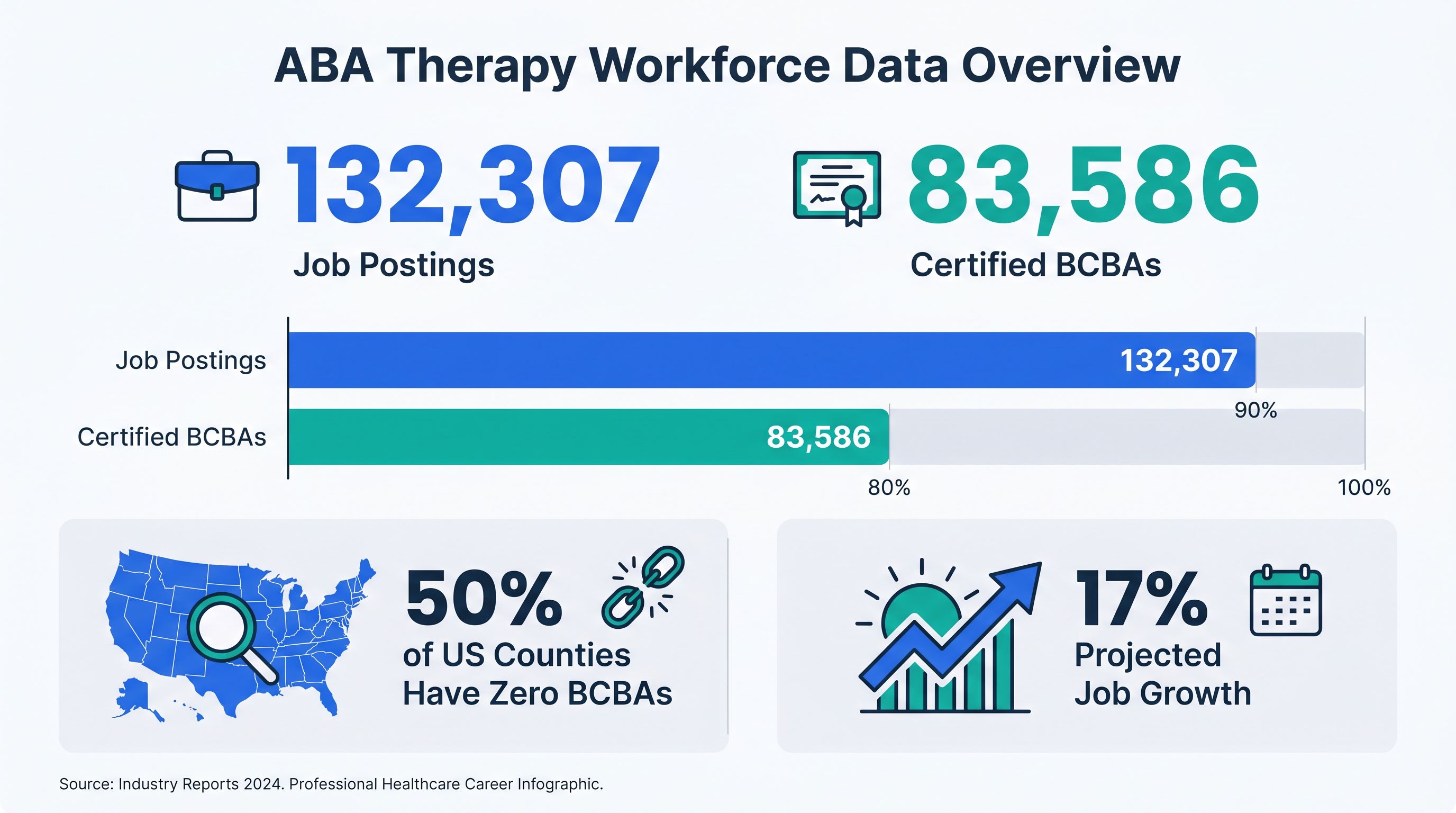
According to the BACB's Lightcast labor market analysis, employers posted 132,307 positions requiring BCBA or BCBA-D certification in 2025. That represents a 28% increase over 2024. Meanwhile, the total number of certified BCBAs stands at 83,586, meaning there are roughly 1.6 open positions for every certified professional in the country.
But the actual shortage runs deeper. Industry estimates suggest the U.S. would need approximately 362,500 BCBAs to meet current demand for autism services alone. That is more than four times the existing supply. Today, the average BCBA carries a caseload of about 39 clients; the recommended benchmark is closer to eight.
Geography makes the gap worse. More than half of all U.S. counties still have zero BCBAs, according to workforce distribution data. Massachusetts leads the nation with 55.1 BCBAs per 100,000 residents; many rural states have fewer than five.
The pipeline is not keeping pace either. The first-time BCBA exam pass rate dropped from 66% in 2020 to 51% in 2025, which means fewer new professionals are entering the field relative to demand.
Where ABA Therapy Jobs Are: Settings and Formats
ABA therapy jobs span a wide range of work environments. The setting you choose shapes your daily routine, client population, and earning potential.
Home-based therapy remains the most common setting, particularly for early intervention. RBTs and BCBAs work directly in clients' homes, which allows families to participate in treatment and helps generalize skills to the natural environment.
Clinic-based therapy is a growing segment. Center-based ABA companies offer structured environments with peer support, specialized equipment, and built-in collaboration with other clinicians. Many of the largest ABA employers operate multi-site clinic networks.
School-based positions are expanding as more districts hire BCBAs and RBTs to support IEP implementation and manage behavioral challenges in the classroom. These roles often follow an academic calendar, which appeals to professionals seeking schedule predictability.
Hospital and healthcare settings employ BCBAs in pediatric units, psychiatric facilities, and long-term residential programs. These positions typically come with higher salaries and institutional benefits packages.
Telehealth and virtual roles represent the fastest-growing format in ABA. What started as a pandemic stopgap has become a standard service delivery model at most mid-to-large ABA organizations. Virtual positions allow BCBAs to serve clients in rural and underserved areas while working remotely.
Non-clinical roles round out the landscape. BCBAs work in insurance utilization review, academic research, organizational behavior management consulting, and corporate training. These positions often offer higher base pay and a departure from direct client work.
How to Get Hired in ABA Therapy Jobs in 2026
The shortage is real, but the strongest candidates still stand out by being strategic. Here is what works at each credential level.
For RBTs and aspiring RBTs
Complete your 40-hour RBT training, pass the competency assessment, and you are immediately hireable. Demand for RBTs is enormous; most ABA companies hire year-round. To command the highest hourly rates, pursue experience in specialty populations (early intervention, adolescents, adults) and demonstrate reliability with scheduling.
For BCBAs
Use the shortage to your advantage. Before accepting an offer, evaluate:
- ✓ Caseload size. If an employer expects 30+ clients, that is a red flag. Ask about current caseload averages before signing.
- ✓ Supervision support. Early-career BCBAs benefit from mentorship. Companies that invest in clinical development retain staff longer.
- ✓ Total compensation. Look beyond base salary. CEU reimbursement, signing bonuses, insurance coverage, and PTO vary widely across employers.
- ✓ Flexibility. Many BCBAs now negotiate hybrid or fully remote schedules. If telehealth competency is part of your skill set, it expands your options significantly.
For a deeper dive into making the most of your leverage, read our BCBA salary negotiation guide.
The Bottom Line
ABA therapy is one of the fastest-growing fields in healthcare, and the workforce gap is not closing anytime soon. With over 132,000 BCBA job postings against fewer than 84,000 certified professionals, the math is straightforward: qualified ABA professionals have options. Every credential level, from behavior analyst to RBT, is in demand across home, clinic, school, hospital, and virtual settings.
The question is not whether you can find an ABA therapy job. It is whether you are choosing the right one.
Stop Searching. Start Getting Found.
CertifyndABA flips the job search. Create an anonymous profile, and let qualified employers send you interview requests based on your credentials and preferences. No resume blasting. No guesswork.
Create Your Free Profile