

Are BCBAs in demand? The numbers leave no room for debate. In 2025, employers posted 132,307 positions requiring BCBA certification, yet only 83,586 Board Certified Behavior Analysts held active credentials in the United States. That works out to roughly 1.6 open positions for every certified BCBA in the country. And this is not a temporary spike; BCBA demand has grown at a 44.2% compounded annual rate since 2017, according to the BACB's employment demand report produced in partnership with Lightcast.
Below, we break down exactly how wide the gap is, what is driving it, where demand is strongest, and what the shortage means for your career as a behavior analyst.
The BCBA Employment Gap by the Numbers
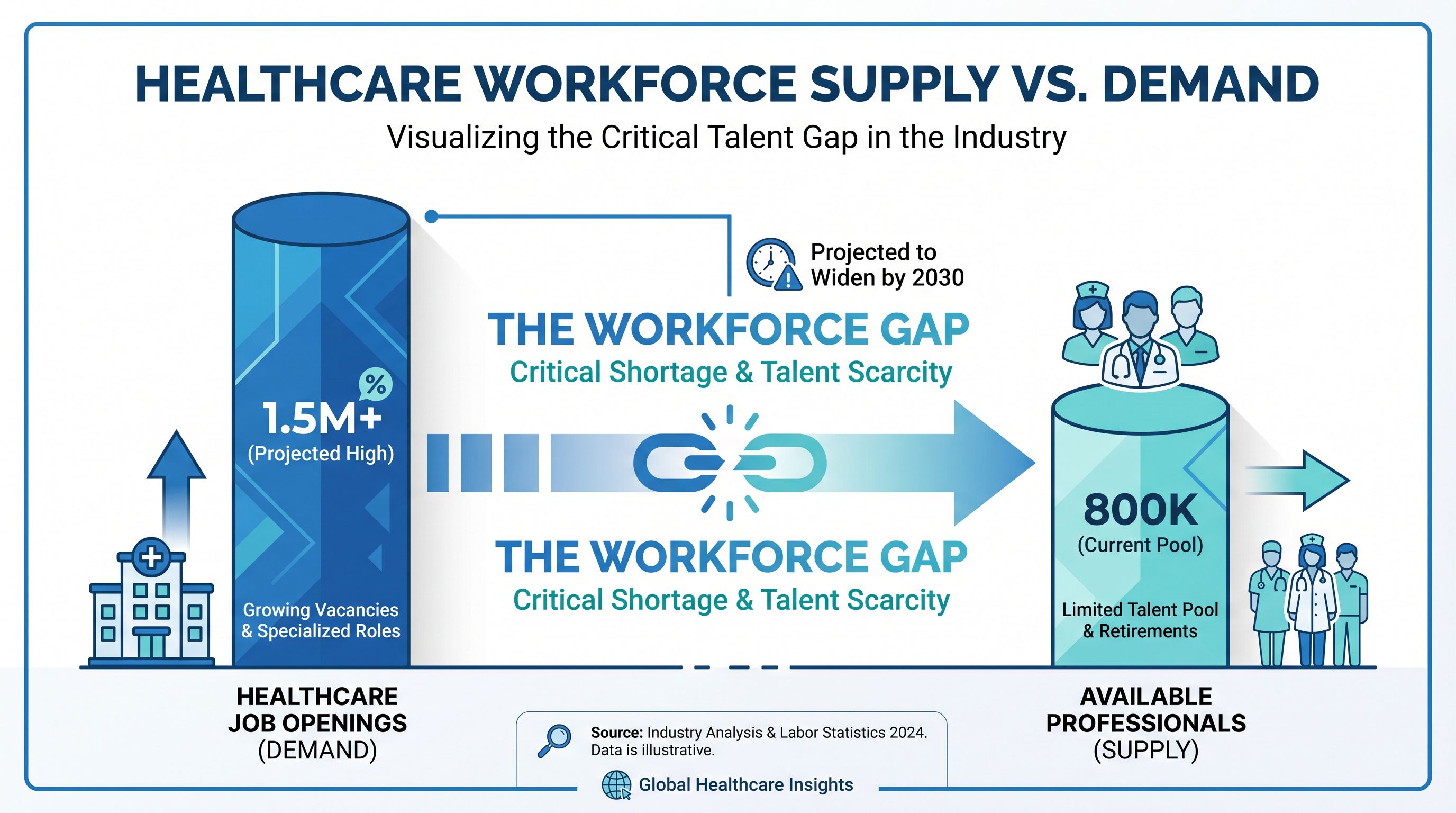
The simplest way to understand the BCBA shortage is to compare supply and demand side by side.
According to the BACB and Lightcast employment demand report published in early 2026, employers posted 132,307 BCBA and BCBA-D positions during 2025. That figure represents a 28% year-over-year increase, itself following a 58% jump in 2024. Demand roughly doubled between 2023 and 2025.
On the supply side, the BACB reports 83,586 active BCBAs as of April 2026. While the certificant population has grown steadily from 44,025 in 2020 to its current level, the growth rate has not kept pace with employer demand. The result is an estimated 50,000 unfilled positions nationwide.
Workforce analysts at TYGES put the long-term gap in even starker terms: the United States would need approximately 362,500 BCBAs to adequately serve the current autism population alone. That is nearly five times the existing supply.
Why BCBA Demand Keeps Growing
Four forces are driving the sustained demand for Board Certified Behavior Analysts, and none of them show signs of slowing down.
Rising Autism Prevalence
The CDC's 2025 Community Report on Autism, based on 2022 surveillance data, identifies 1 in 31 children (3.2%) aged eight as having autism spectrum disorder. That is up from 1 in 44 in 2018, 1 in 88 in 2008, and 1 in 150 in 2000. While experts attribute much of the increase to improved screening and diagnostic practices rather than a rise in underlying incidence, the practical effect is the same: more children are identified, more families seek ABA services, and more BCBAs are needed to provide them.
Insurance Mandate Expansion
All 50 states and Washington, D.C. now have autism insurance mandates that require coverage for ABA therapy. While coverage limits, age restrictions, and practitioner qualification requirements vary by state, the broad expansion of mandated coverage has dramatically increased the number of families who can access and afford ABA services. More insured patients means more demand for the clinicians who deliver those services.
Faster-Than-Average Job Growth
The U.S. Bureau of Labor Statistics projects 17% employment growth for substance abuse, behavioral disorder, and mental health counselors from 2024 to 2034. That is roughly five times the 3% national average for all occupations. The BLS estimates approximately 48,300 openings per year in this broader category, driven by ongoing need for behavioral and mental health services.
A Constrained Supply Pipeline
Even as demand accelerates, the pipeline of new BCBAs has structural limits. The first-time BCBA exam pass rate fell to 51% in 2025, down from 66% in 2020, according to BACB examination data. Of the 23,151 candidates who tested in 2025, only about 8,000 earned certification. At that rate, new supply adds roughly 10% to the workforce each year, while job postings are growing at 28% or more annually. The math does not close the gap.
Where Are BCBAs in Demand the Most?
The BCBA shortage is a national issue, but it hits some regions much harder than others.
Five states account for 38% of all BCBA job postings: California leads with 15% of national demand, followed by New Jersey, Texas, Massachusetts, and North Carolina. These states combine large populations, high autism prevalence, and strong insurance mandates.
Geographic density tells another story. Massachusetts has the highest BCBA concentration in the country at 55.1 per 100,000 residents, yet still posts heavy demand because its well-established ABA market generates high service utilization. At the opposite end, states like Wyoming have just 7.5 BCBAs per 100,000 residents, and more than half of all U.S. counties have zero practicing BCBAs.
The urban-rural divide compounds the problem. According to workforce analyses, 35% of families in rural areas report significant delays accessing ABA services, compared to 23% in urban areas. This access gap is one reason telehealth and travel BCBA roles have surged in recent years.
What the BCBA Shortage Means for Job Seekers
If you hold a BCBA credential or are working toward one, the employment gap works directly in your favor. Here is what the data translates to in practical terms.
- ✓ Negotiating leverage. When there are 1.6 jobs per BCBA, employers compete for you. This shifts salary negotiations, benefits packages, and schedule flexibility in your direction. If you have not negotiated recently, our BCBA salary negotiation guide breaks down how to approach those conversations.
- ✓ Signing bonuses and relocation packages. Employers in underserved and high-demand areas are offering signing bonuses of $10,000 to $20,000, plus relocation assistance, to attract BCBAs willing to fill geographic gaps.
- ✓ Accelerated career advancement. The shortage is compressing traditional career timelines. BCBAs with two to three years of experience are moving into clinical director and supervisory roles that previously required five or more years. See our overview of the highest-paying BCBA jobs for roles that benefit most from the talent crunch.
- ✓ More flexibility in how you work. Remote, telehealth, and hybrid BCBA positions have grown significantly as employers try to bridge the geographic access gap. If location flexibility matters to you, the market is increasingly willing to accommodate it.
- ✓ Choice across settings. Whether you prefer school-based work, hospital settings, insurance and utilization review, or clinical practice, high demand exists across every major work setting.
BCBA Supply and Demand: A Timeline
To see how quickly the gap has widened, consider the BACB's certificant growth alongside the job posting trajectory.
| Year | Active BCBAs | New Certified | Job Postings |
|---|---|---|---|
| 2020 | 44,025 | 6,243 | N/A |
| 2021 | 54,223 | 10,460 | N/A |
| 2022 | 59,976 | 5,980 | N/A |
| 2023 | 66,339 | 6,948 | ~66,000 |
| 2024 | 74,125 | 8,164 | ~103,000 |
| 2025 | 81,566 | 8,021 | 132,307 |
Sources: BACB Certificant Data (April 2026), BACB/Lightcast Employment Demand Report (Q1 2026). Job posting estimates for 2023-2024 derived from the 28% and 58% year-over-year growth rates reported in the 2025 data.
The pattern is clear: job postings have doubled in two years while the certificant base grew by roughly 23% over the same period. Until the new-supply pipeline can produce significantly more than 8,000 BCBAs per year, the gap will continue to widen.
The Bottom Line: BCBAs Are in Extraordinary Demand
The BCBA employment gap is not a projection or a trend to watch. It is the current reality. With 1.6 open positions per certified BCBA, a constrained supply pipeline, rising autism identification rates, and universal insurance mandates for ABA services, the market strongly favors behavior analysts who are looking for new roles or better opportunities.
Whether you are a newly certified BCBA exploring your first position, an experienced clinician considering a change in setting, or a professional weighing a move to a higher-demand state, the data says you have options. The question is not whether opportunities exist; it is finding the right one.
Let Employers Come to You
With 1.6 open positions per BCBA, you do not need to chase job listings. Create a free anonymous profile on CertifyndABA and receive interview requests from employers who match your criteria for setting, salary, and location.
Create Your Free Profile