


In 2025, employers posted 132,307 positions requiring BCBA certification. Only 83,586 BCBAs hold active credentials in the United States. That gap means every Board Certified Behavior Analyst has options; but choosing the right BCBA specialization can mean the difference between a $65,000 salary and one that tops $130,000.
Not all corners of the ABA field face the same workforce pressure. More than half of U.S. counties have zero practicing BCBAs, and roughly 72% of the profession focuses on a single population: individuals with autism. That concentration leaves significant opportunity gaps in other specializations, from organizational behavior management to feeding disorders.
This guide breaks down eight major BCBA specializations with real salary data and demand signals so you can make a strategic career decision backed by numbers, not guesswork.
The BCBA Workforce in 2026: Why Specialization Pays Off
The BCBA profession has grown 85% in five years, from 44,025 certificants in 2020 to 81,566 at the end of 2025, according to BACB annual report data. As of April 2026, that figure stands at 83,586. The field adds roughly 8,000 new BCBAs each year.
Demand has grown even faster. The BACB/Lightcast employment demand report tracked 132,307 job postings requesting BCBA certification in 2025, a 28% increase over 103,150 in 2024. The Bureau of Labor Statistics projects 17% employment growth for behavior analysts from 2024 to 2034, adding approximately 81,000 new positions.
The geographic picture adds another layer. Massachusetts leads the nation with 55.1 BCBAs per 100,000 residents, while many rural states fall below 15 per 100,000. According to workforce analysis data, an estimated 362,500 BCBAs would be needed to meet current demand; roughly five times the active workforce.
The practical takeaway: where you specialize and where you practice both shape your leverage. BCBAs who target underserved specializations or underserved regions can command higher pay, choose their employers, and advance faster.
8 BCBA Specializations Ranked by Demand and Salary
1. Autism and Developmental Disabilities
The largest specialization by far. Approximately 72% of BCBAs focus primarily on autism, driven by ASD prevalence rates of roughly 1 in 36 children in the United States. Typical settings include ABA therapy centers, homes, and outpatient clinics.
Salary range: $65,000 to $90,000 for direct-service roles; higher for supervisors.
Demand signal: Strong volume but also the most competition among BCBAs. Employers in this space increasingly differentiate on benefits, caseload sizes, and supervision support.
2. Early Intervention (Birth to Age 6)
A specialized subset of developmental work. Early intervention BCBAs focus on toddlers and preschool-age children, often collaborating with speech-language pathologists and occupational therapists. Earlier diagnosis trends are pushing demand for practitioners trained in naturalistic developmental behavioral interventions.
Salary range: $65,000 to $85,000. Entry-level friendly; many new BCBAs start here.
Demand signal: Growing steadily as research supports the impact of early, intensive intervention.
3. School-Based Behavior Analysis
School districts are expanding their behavioral support programs, hiring BCBAs to implement school-wide positive behavioral interventions and supports (PBIS), conduct functional behavior assessments, and consult on individual behavior plans. These roles often come with stronger benefits packages and more predictable schedules than clinic-based positions.
Salary range: $60,000 to $80,000 for building-level roles; district-level behavior specialists and multi-campus supervisors earn $80,000 to $110,000.
Demand signal: High and growing. Many districts struggle to attract BCBAs away from clinical settings, creating favorable negotiating conditions for those interested in schools.
4. Organizational Behavior Management (OBM)
OBM applies ABA principles to workplace performance, safety, and culture. The BACB describes OBM as focused on "assessing and changing the work environment to improve employee performance and workplace culture." OBM professionals work in healthcare systems, manufacturing, corporate HR, and consulting firms.
Salary range: $70,000 to $115,500 for OBM-type quality and training roles inside ABA (median $92,750 across 10 employers), and a $108,937 median for behavioral safety roles outside ABA, which rarely ask for a BCBA, per our September 2026 review of 2,580 job postings.
Demand signal: Small on both sides. Only 623 BCBAs, about 0.8% of those who named a primary emphasis, list OBM in BACB data from January 2026. Of the 99 OBM-type roles we found in September 2026 postings, 16 were at ABA employers; most of the rest were behavioral safety jobs that do not ask for a BCBA.
5. Feeding Disorders and Severe Behavior
Hospital-based BCBAs who specialize in pediatric feeding disorders or severe challenging behavior work on interdisciplinary teams alongside physicians, nurses, and other therapists. These roles require comfort with medical settings and often involve intensive, structured protocols.
Salary range: $75,000 to $125,000. Feeding disorder specialists command a $10,000 to $18,000 salary premium over generalist BCBAs at similar experience levels.
Demand signal: Consistently high. Fewer BCBAs pursue these paths due to the additional training requirements and intensity of the work, which keeps demand elevated and compensation strong.
6. Clinical Leadership and Director Roles
Clinical directors oversee multi-site ABA programs, manage teams of BCBAs and RBTs, and ensure quality across service delivery. The BCBA talent shortage has accelerated the leadership pipeline; practitioners with five or more years of experience are being recruited into director-level positions faster than in previous years.
Salary range: $90,000 to $130,000+. The average clinical director BCBA salary sits around $100,000 nationally.
Demand signal: Acute shortage. As ABA organizations scale, the need for experienced leaders who can supervise, train, and maintain quality grows disproportionately.
7. Telehealth and Virtual ABA
The fastest-growing service delivery model in the field. Telehealth BCBAs provide parent training, supervision, and consultation remotely, directly addressing the geographic access problem: more than half of U.S. counties have no local BCBA. Some payer-side roles, including utilization review and quality assurance, are also conducted virtually.
Salary range: Competitive with in-person roles; varies by employer. Remote positions often include flexibility premiums.
Demand signal: Rapidly expanding, though 28% of rural residents still lack adequate broadband access, which limits reach in the areas that need it most.
8. Gerontology and Adult Services
An emerging specialization. BCBAs in gerontology apply behavioral principles to dementia care, traumatic brain injury rehabilitation, and behavioral health in aging populations. As the U.S. population ages, demand for behavioral expertise in geriatric settings is expected to increase.
Salary range: Data is limited due to the small number of practitioners, but hospital and residential facility roles in this area typically pay $70,000 to $100,000.
Demand signal: Early-stage but growing. BCBAs who establish expertise here now will have first-mover advantage as the market develops.
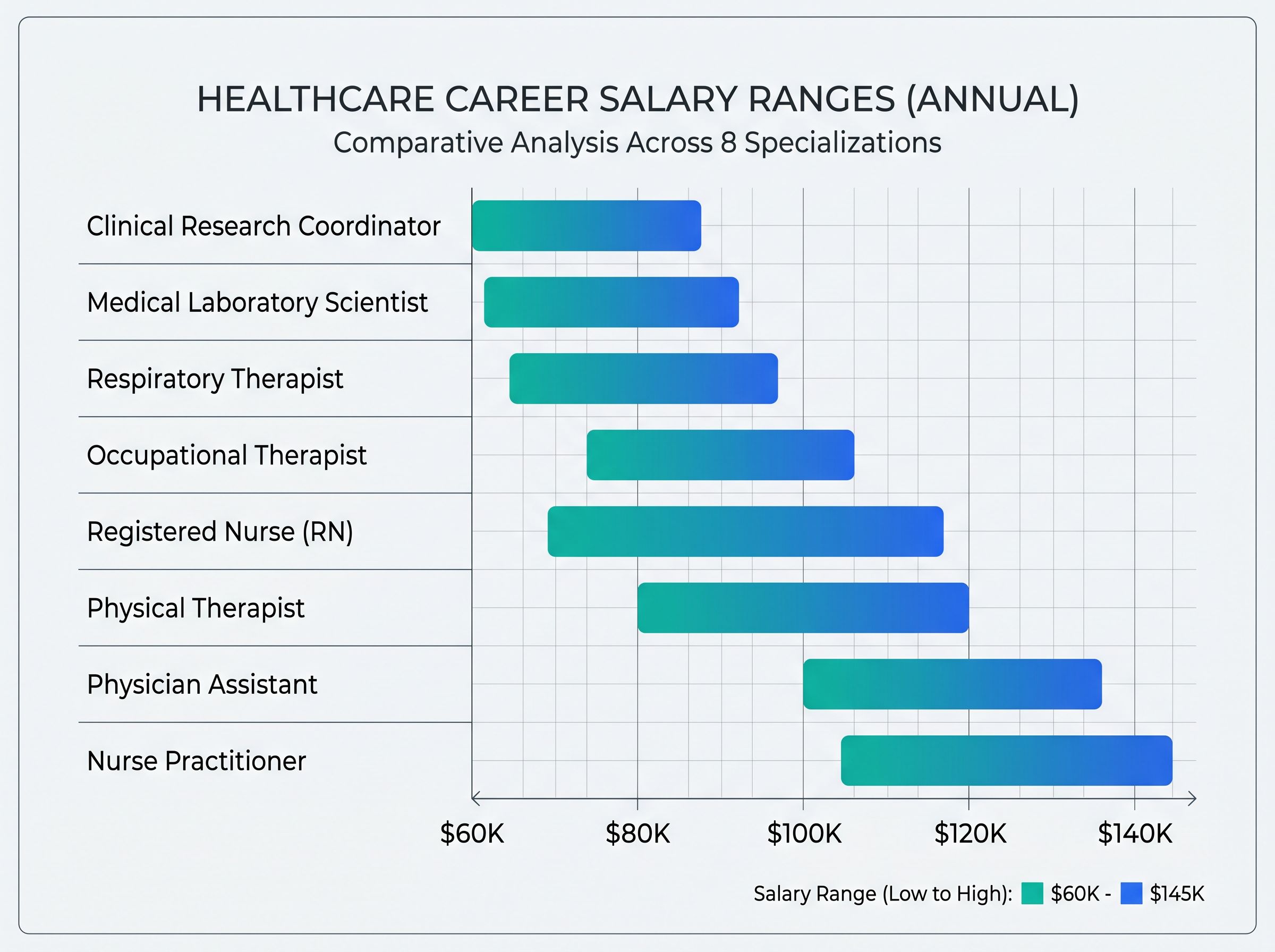
Which BCBA Specializations Face the Biggest Workforce Gaps?
Not every specialization faces equal pressure. Here is where the numbers point to the biggest mismatches between supply and demand:
Organizational Behavior Management is the hardest gap to measure. Only about 0.8% of BCBAs name it as their primary emphasis, but most OBM-type jobs sit outside ABA, in behavioral safety, and rarely ask for a BCBA. Inside ABA, the openings are quality assurance and staff training roles, which posted a median of $92,750 in September 2026. See our OBM jobs guide for what these roles are called and how to move into one.
Clinical directors and multi-site leaders are in acute demand. Health and education providers are actively competing for senior BCBAs who can scale programs, manage supervision pipelines, and maintain quality across locations.
Feeding disorders and severe behavior specialists earn premium pay precisely because so few BCBAs pursue these intensive, hospital-based paths. The additional training barrier works in favor of those who invest in it.
Telehealth is creating an entirely new demand category. Payer-side utilization management roles, virtual parent training, and remote supervision positions barely existed five years ago. They now represent a meaningful and growing segment of BCBA job postings.
School-based roles are expanding as districts invest in behavioral support, but many BCBAs still gravitate toward clinical settings. Districts that struggle to recruit often offer competitive salaries and benefits to close the gap.
"With 72% of BCBAs focused on autism, the other 28% of the profession is spread across specializations that are growing faster than the workforce can fill them."
How to Choose the Right BCBA Specialization
Your specialization should reflect a combination of genuine interest, market opportunity, and practical fit. Here are five factors to weigh:
- ✓ Reflect on your fieldwork experience. Which populations and settings gave you energy? Passion sustains careers; market data alone does not.
- ✓ Follow the demand data. Specializations with fewer practitioners and growing demand offer more negotiating leverage, faster advancement, and higher pay ceilings.
- ✓ Factor in your geography. A school-based BCBA in a district with no behavior analyst has more impact and leverage than one in a saturated metropolitan market.
- ✓ Map additional training requirements. OBM may benefit from business coursework. Feeding disorders often require interdisciplinary collaboration skills. School-based work pairs well with an education background.
- ✓ Take advantage of the market. With roughly 1.6 job postings for every active BCBA, the current landscape lets you explore new specializations without the career risk that would exist in a tighter job market.
Make Your Specialization Work for You
The ABA field does not just need more BCBAs. It needs BCBAs in the right places, with the right expertise. Whether you are a new BCBA choosing your direction or an experienced analyst considering a pivot, the workforce data favors specialists who align their skills with market gaps.
The eight specializations covered here each offer distinct paths with real demand. The question is which one fits your strengths, your goals, and the communities you want to serve.
Showcase Your Specialization to the Right Employers
CertifyndABA lets you highlight your specialty areas, credentials, and preferred settings on an anonymous profile. Employers who need exactly your expertise reach out to you; no job boards, no guesswork.
Create Your Free Profile