

BCBA salary in Texas averages between $83,000 and $89,000 in 2026, depending on the source. That puts the state below coastal markets like California and New York; but Texas salaries are climbing faster than almost anywhere else in the country, driven by a 62% surge in job postings and only about 5,300 certified BCBAs serving over 30 million residents.
Whether you are weighing a move to Texas, negotiating a new offer, or benchmarking your current pay, this guide breaks down what BCBAs actually earn across the state's major metro areas and what is pushing those numbers higher every year.
Texas BCBA Salary: The Full Pay Range
Multiple salary platforms report similar averages for BCBAs working in Texas:
Here is how pay breaks down across the experience spectrum:
| Percentile | Annual Salary | Typical Profile |
|---|---|---|
| 10th percentile | ~$55,000 | Entry-level, rural, or nonprofit settings |
| 25th percentile | $68,900 | New BCBAs in clinical roles |
| Median (50th) | $83,000 - $85,000 | Mid-career, metro area clinics |
| 75th percentile | $84,300 - $112,000 | Senior BCBAs, supervisory roles |
| 90th percentile | $123,444+ | Clinical directors, private practice owners |
Sources: ZipRecruiter reports a Texas average of $82,987 (April 2026); Indeed reports $88,915; Glassdoor reports $89,098 ($43/hour equivalent). The variation reflects differences in methodology and the mix of reported salaries on each platform.
BCBA Salary by Texas Metro Area
Where you practice in Texas matters significantly. Houston leads in average BCBA pay, while Dallas-Fort Worth offers the highest top-end potential.
| Metro Area | Average Salary | Top Earners (90th %ile) |
|---|---|---|
| Houston-The Woodlands | $85,025 | $112,000+ |
| Dallas-Fort Worth | $82,000 - $85,000 | $96,140+ |
| Austin-Round Rock | $84,000 - $88,000 | $95,000+ |
| San Antonio | $78,000 - $82,000 | $94,910+ |
| Suburban growth markets (Cypress, Katy, Fort Worth) | $80,000 - $90,000 | Varies |
Houston's higher average reflects the concentration of large ABA providers in the metro, combined with a cost of living that remains below coastal cities. Austin commands a premium of roughly 6.5% above the state average, likely driven by a tighter labor pool relative to the city's rapid population growth. San Antonio tends to run 5-10% below Houston and Dallas, though the gap narrows for experienced BCBAs in supervisory positions.
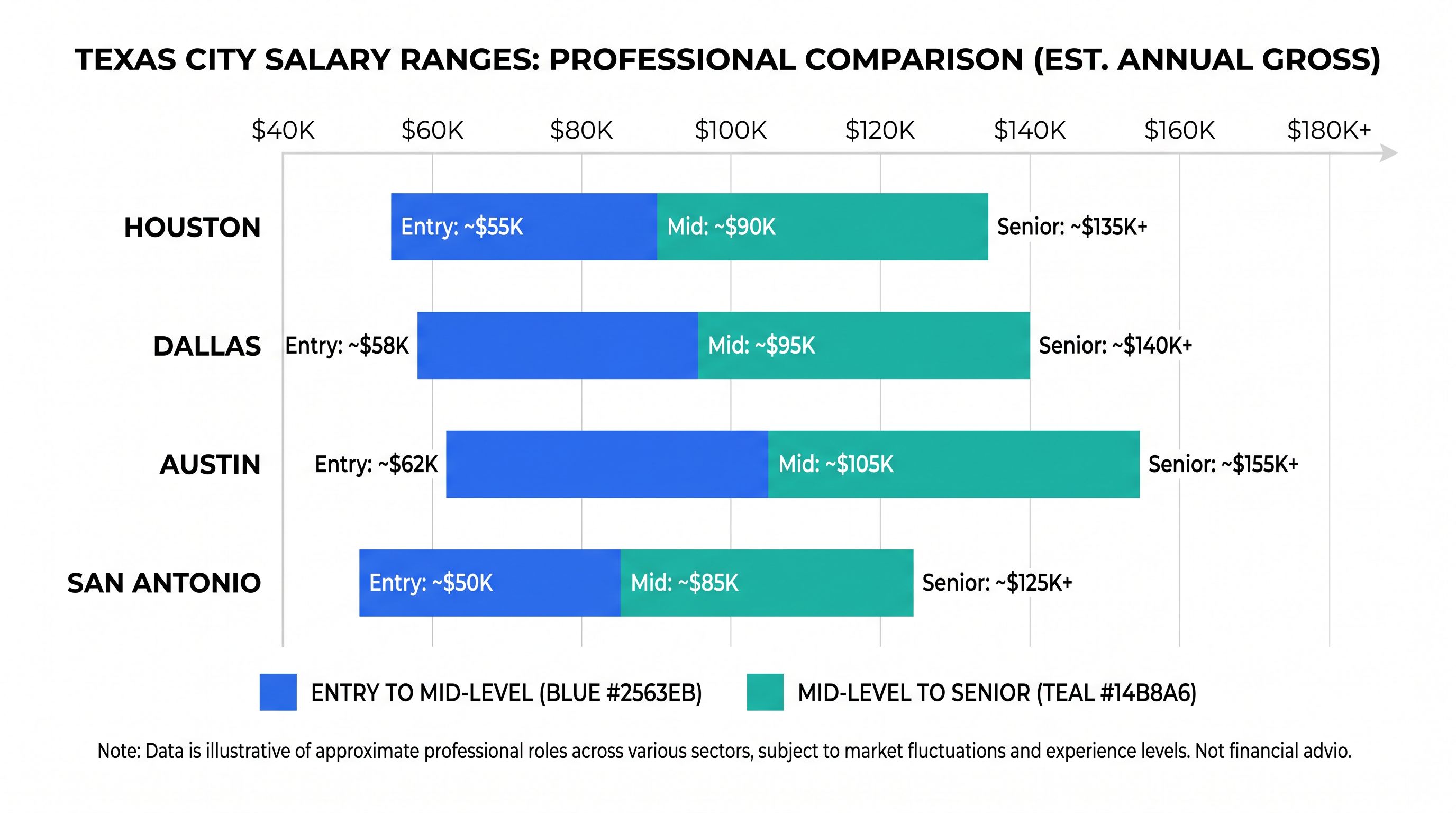
An emerging pattern: suburban markets outside the major urban cores (Cypress, Katy, and cities in the Fort Worth corridor) are increasingly competitive on pay. Practices in these areas need to match or exceed metro salaries to attract BCBAs away from the urban clinic networks.
Why Texas BCBA Salaries Are Rising
If Texas historically ranks on the lower end for BCBA pay nationally, why are salaries climbing so quickly? Three forces are converging.
1. Extreme supply-demand imbalance
Texas has approximately 5,297 certified BCBAs according to the BACB's region-specific data. Nationally, there were 132,307 BCBA job postings in 2025 alone, a 28% increase from the prior year. Texas ranks among the top five states for demand, accounting for a significant share of that national total alongside California, New Jersey, Massachusetts, and North Carolina.
The math is straightforward: there are roughly two to three open positions for every certified BCBA in the state. That ratio gives job seekers meaningful leverage.
2. Insurance mandate expanding access
The Texas Autism Insurance Equity Act of 2013 requires state-regulated health plans to cover ABA therapy for individuals diagnosed with autism. As awareness of the mandate has grown and more families pursue services, demand for qualified BCBAs to deliver and supervise those services has expanded alongside it.
3. Faster-than-average projected growth
The Bureau of Labor Statistics projects 27.2% employment growth for behavior analysts in Texas through 2032. That is nearly double the 17% national average and translates to approximately 5,020 new positions and 2,220 average annual openings in the state.
"More than half of all U.S. counties have zero practicing BCBAs. Texas's rural regions face some of the most acute shortages in the country."
What Affects Your BCBA Salary in Texas
Beyond geography, several factors determine where you fall on the pay scale:
- ✓ Experience level. New BCBAs typically start in the $68K-$75K range. After 3-5 years, $85K-$95K is realistic. Clinical directors and those with 8+ years regularly exceed $100K.
- ✓ Practice setting. Insurance-based private clinics and large ABA companies tend to pay more than school districts or nonprofit organizations. Private practice ownership can push total compensation well beyond $123K.
- ✓ Specialization. BCBAs who supervise multiple RBTs, hold BCBA-D credentials, or specialize in high-demand areas (early intervention, telehealth, organizational behavior management) command salary premiums.
- ✓ Urban vs. rural. Rural areas historically paid less, but some are now offering competitive or above-market rates plus relocation packages to attract BCBAs to underserved communities.
- ✓ Employment type. Full-time salaried positions offer stability and benefits. Contract or per diem BCBAs can earn $50-$75+ per hour but absorb their own taxes, insurance, and overhead.
How to Maximize Your BCBA Salary in Texas
The demand gap works in your favor if you approach negotiations strategically.
Know your market value before you negotiate. Cross-reference your experience level, metro area, and setting against the salary ranges in this article. When you have data showing that BCBAs in your area earn $85K on average and you are being offered $72K, the conversation shifts from "I want more" to "here is what the market pays."
Evaluate total compensation. Texas has no state income tax, which effectively raises your take-home pay compared to states like California or New York. Beyond base salary, weigh sign-on bonuses, CEU budgets, supervision stipends, telehealth flexibility, and PTO policies. A $83K offer with strong benefits and flexible scheduling may outperform a $90K offer with high caseloads and limited support.
Consider high-demand submarkets. Suburban communities surrounding Houston and Dallas are growing rapidly. Practices in these areas often pay premiums to attract talent from the urban core. If you are open to location flexibility, you may find that a slightly longer commute or a suburban practice translates to meaningfully higher pay.
Pursue leadership credentials. Moving into supervisory roles or clinical director positions is the clearest path to the $100K-$123K+ range. Building a caseload of supervised RBTs, pursuing BCBA-D certification, or developing expertise in a specialized population all increase your earning potential.
How Texas Compares to Other States
Texas currently ranks toward the lower end nationally for BCBA compensation. States like California, New Jersey, and Massachusetts report higher averages. However, context matters: Texas has no state income tax, generally lower cost of living (especially outside Austin), and the salary growth trajectory is steeper than most other states.
A BCBA earning $85,000 in Houston retains more take-home pay than one earning $95,000 in Los Angeles or $100,000 in New York City after taxes and housing costs. When you factor in the 62% annual growth in job postings, Texas is one of the strongest seller's markets in the country for behavior analysts.
The Bottom Line
Texas BCBAs earn $83,000 to $89,000 on average in 2026, with top earners exceeding $123,000. While absolute pay trails some coastal states, the combination of no state income tax, 62% job posting growth, and a severe workforce shortage means Texas BCBAs have leverage that most professionals would envy.
With only about 5,300 certified BCBAs serving a state of over 30 million people, the supply-demand imbalance is not resolving any time soon. If you are a BCBA working in or considering Texas, the market fundamentals are firmly on your side.
Know Your Worth Before You Negotiate
Create a free anonymous profile on CertifyndABA and see what Texas employers are willing to offer. Compare salary ranges, benefits, and work settings without revealing your identity until you are ready.
Create Your Free Profile