

California BCBAs earn between $87,900 and $91,200 on average, depending on the source. That sounds competitive until you adjust for the state's cost of living, which drops the real purchasing power to roughly $78,100 and ranks California dead last among all 50 states. The good news: a persistent talent shortage with approximately 50,000 unfilled BCBA positions nationally means California behavior analysts have serious negotiating leverage. Here is what the BCBA salary landscape in California actually looks like in 2026, and how to make the numbers work in your favor.
California BCBA Salary: The Statewide Numbers
Salary data for California BCBAs varies by source and methodology. Here is what the major platforms report as of mid-2026:
- Indeed: $91,151 per year (based on 7,100 salary data points collected over 36 months)
- ZipRecruiter: $87,909 per year
- Glassdoor: $136,613 per year (likely includes total compensation such as bonuses and benefits)
The Indeed figure, drawn from the largest sample size, provides the most reliable base salary estimate. The typical range runs from $72,745 at the low end to $114,215 at the high end, with top earners clearing $140,000 or more.
For context, the national average BCBA salary sits at approximately $89,075 according to ZipRecruiter. California's nominal pay is roughly at parity with the national figure, which might surprise behavior analysts who expect a significant premium for working in the nation's most expensive state.
Entry-level BCBAs in California typically start between $75,000 and $82,000, while those with five or more years of experience commonly earn $95,000 to $115,000. Clinical directors and senior leadership roles push well beyond $120,000.
BCBA Salary by California Metro Area
Statewide averages obscure enormous variation between metros. A BCBA in San Francisco earns roughly $10,000 more per year than one in Sacramento, but faces significantly higher housing costs. Here is how the major California metros compare:
| Metro Area | Average Salary | 25th Percentile | 90th Percentile |
|---|---|---|---|
| San Francisco | $100,748 - $104,946 | $87,200 | $156,107 |
| San Jose | $97,316 | - | - |
| San Diego | $94,572 | $78,600 | $140,676 |
| Oakland / East Bay | $94,789 | - | - |
| Los Angeles | $91,950 - $95,980 | - | - |
| Sacramento | $90,367 - $90,482 | - | - |
Sources: Indeed (May 2026, 7.1K data points), ZipRecruiter (December 2025 - May 2026). Ranges shown where multiple sources provided data.
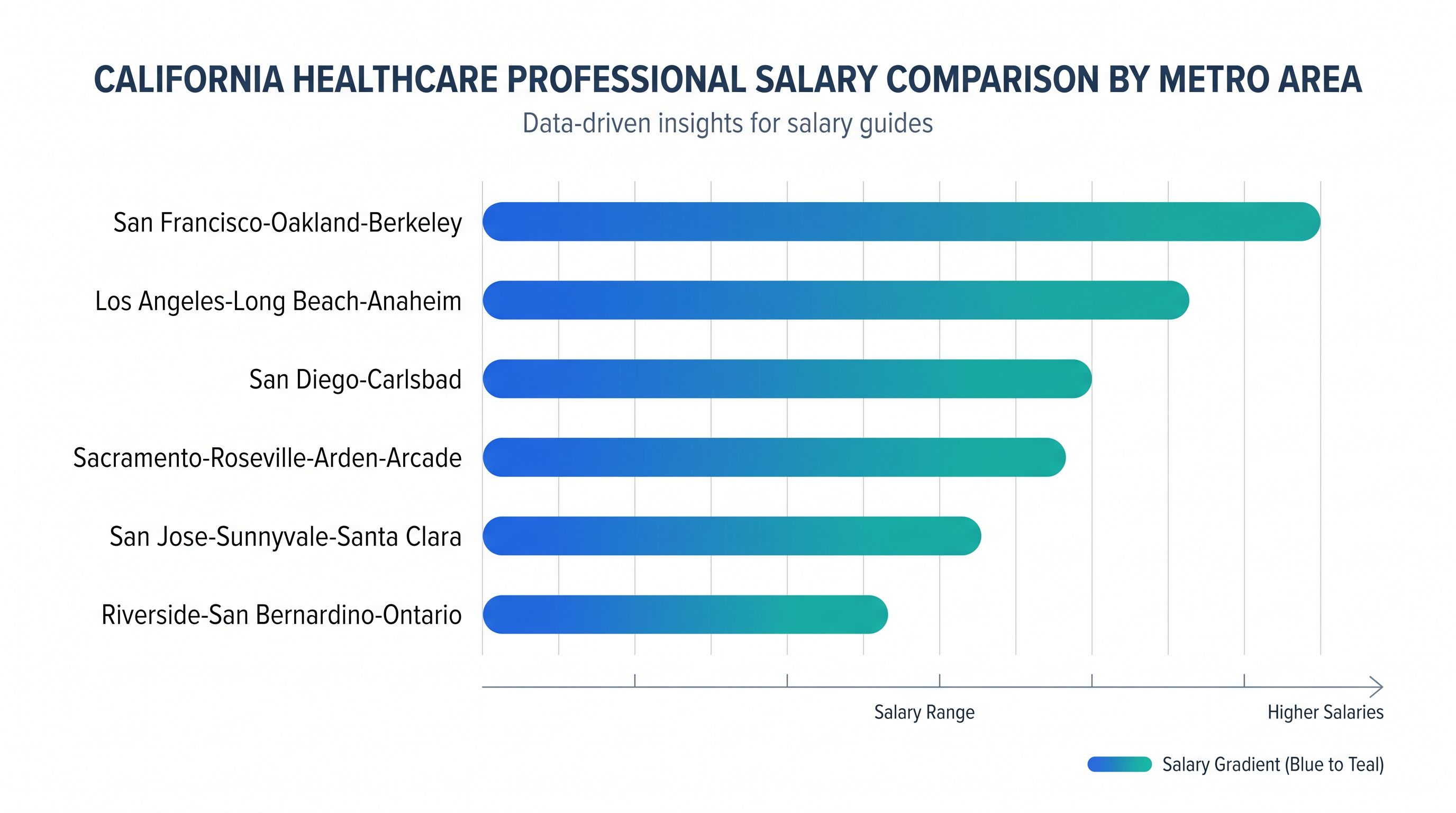
San Francisco consistently leads with averages above $100,000, driven by high demand from behavioral health startups and hospital systems in the Bay Area. Los Angeles, the state's largest BCBA job market by volume with over 23,000 positions in the broader counselor category according to Bureau of Labor Statistics data, offers mid-range pay that reflects its massive supply of both clinicians and employers.
Sacramento and the Inland Empire represent an underappreciated opportunity. Salaries in these metros trail the Bay Area by only $10,000 to $15,000, but housing costs are dramatically lower. For BCBAs focused on maximizing purchasing power, these regions offer the best value in the state.
The Cost-of-Living Problem: Why California Ranks Last
Here is the statistic most salary articles leave out: after adjusting for cost of living, California's average BCBA salary of roughly $88,000 drops to approximately $78,100 in purchasing power. That ranks California 50th out of 50 states.
For comparison, a BCBA in South Dakota earning a similar nominal salary of $89,000 has purchasing power equivalent to roughly $101,100. That is a $23,000 gap in real spending ability for the same credential.
This does not make California a poor choice for BCBAs. The state offers unmatched career diversity, clinical specialization opportunities, and the largest ABA job market in the country. But it does mean that BCBAs should negotiate with this reality in mind.
What Drives BCBA Pay Differences in California
Several factors explain why two BCBAs in the same city can earn vastly different salaries:
Work setting matters more than you might think. Private practice and home-based ABA services typically pay 15% to 25% more than school-based or agency positions. Hospital-based behavioral health roles and insurance utilization review positions also command premiums, though they often require additional experience.
Experience creates a steep curve. Entry-level BCBAs fresh out of their supervised fieldwork start between $75,000 and $82,000. Mid-career clinicians with three to five years of experience earn $90,000 to $105,000. Clinical directors and regional supervisors regularly exceed $120,000, with some top employers paying $150,000 or more for leadership roles.
Specialization pays. BCBAs with expertise in early intervention, telehealth supervision, or organizational behavior management (OBM) command salary premiums. The growing demand for telehealth-delivered ABA services has created a niche for BCBAs comfortable supervising remote RBT teams.
Employer type varies wildly. According to Indeed data, some California employers post BCBA salaries exceeding $180,000. These tend to be community health organizations, specialized clinics, or multi-site practices competing aggressively for experienced clinicians. On the other end, nonprofit agencies and school districts may offer lower base pay but include benefits like state pension contributions, generous PTO, and loan forgiveness programs.
Full-time vs. contract. Independent contractor BCBAs often earn higher hourly rates, typically $55 to $75 per hour, but forgo employer-provided health insurance, retirement contributions, and paid time off. For a detailed comparison, see our guide on BCBA independent contractor vs. employee arrangements.
The California BCBA Talent Shortage: Your Negotiation Leverage
California's salary numbers only tell half the story. The other half is the workforce gap, and it heavily favors job-seeking BCBAs.
Nationally, employers posted approximately 132,300 positions requiring BCBA or BCBA-D certification in 2025, according to an analysis by Acuity News. Only 81,566 BCBAs held active credentials at the end of that year. That is a shortfall of roughly 50,000 unfilled positions across the country.
"California alone represents 15% of all national BCBA demand, but holds only 12.7% of the supply."
According to the BACB's certificant data as of April 2026, California has 10,654 active BCBAs and 351 BCBA-Ds, making it the state with the highest concentration of board-certified behavior analysts in the country. Yet it still cannot fill positions fast enough.
Several factors drive this persistent gap:
- High autism diagnosis rates: California reports 1 in 27 children diagnosed with autism spectrum disorder, above the national average of roughly 1 in 36 according to CDC data. More diagnoses mean more demand for ABA services.
- Massive public funding: California allocates $2.3 billion annually for autism services, a 40% increase since 2020. Medi-Cal covers all medically necessary behavioral health treatment, including ABA therapy, for eligible members under 21.
- Insurance mandates: California's autism insurance mandate, requiring private insurers to cover ABA therapy, has driven a 22% increase in diagnoses since 2020. More coverage means more families seeking services.
- Supply growth can't keep pace: While the number of credentialed BCBAs grows roughly 10% year over year, job postings for BCBAs have grown at a 44.2% compound annual rate from 2017 to 2025.
For BCBAs, this gap translates directly into negotiating power. With at least two open positions for every available BCBA nationally, California behavior analysts can expect multiple offers, competitive signing bonuses, and employers willing to negotiate on salary, benefits, and work arrangements.
The TYGES Healthcare analysis found that California has 27.1 BCBAs per 100,000 residents. That sounds adequate, but falls short when measured against the state's autism prevalence and the broader population of individuals who benefit from ABA-based interventions. Urban hubs like Los Angeles and San Francisco have better ratios; suburban and rural areas across the Central Valley, Inland Empire, and Northern California face much steeper shortages.
How to Maximize Your BCBA Salary in California
Knowing the market data is step one. Using it to your advantage is step two. Here are specific strategies for California BCBAs looking to maximize their compensation:
- ✓ Know your metro's specific range. Do not accept a statewide average as your benchmark. A San Francisco employer offering $90,000 is paying below market; the same offer in Sacramento is competitive. Use the metro-level data in this article as your starting point.
- ✓ Evaluate total compensation, not just base salary. California employers often offset high living costs with signing bonuses ($3,000 to $10,000 is common), CEU stipends, student loan repayment assistance, relocation packages, and comprehensive benefits. A $90,000 base with strong benefits may outperform a $100,000 base with limited perks.
- ✓ Consider cost-of-living arbitrage. Sacramento, Fresno, and the Inland Empire offer BCBA salaries within 10% of Bay Area pay but at significantly lower housing costs. If your employer supports hybrid or telehealth supervision, you can access Bay Area clients while living in a more affordable region.
- ✓ Pursue high-demand specializations. Early intervention, telehealth ABA supervision, and organizational behavior management consistently command salary premiums. If you are building your career in California, investing in one of these niches pays measurable dividends. See our guide to BCBA specializations for more detail.
- ✓ Use the talent shortage as leverage. With approximately two open positions for every available BCBA, you are not asking for a favor when you negotiate. You are responding to market conditions. Come to negotiations with data: your metro's average salary, competing offers, and the employer's likely cost of leaving the position unfilled.
- ✓ Benchmark your value anonymously. Creating a profile on CertifyndABA lets you receive interview requests and salary offers from employers without revealing your identity. It is the fastest way to understand what California employers are actually willing to pay for your qualifications and experience level.
For a deeper dive into negotiation tactics specific to the ABA field, check out our BCBA salary negotiation guide.
California BCBA Salary: The Bottom Line
California BCBAs earn competitive nominal salaries ranging from roughly $88,000 to $105,000 depending on metro area, with top earners exceeding $140,000. The state holds the largest concentration of BCBAs in the country (10,654) and accounts for 15% of all national demand. But high living costs, particularly in the Bay Area and Los Angeles, erode purchasing power significantly.
The persistent talent shortage changes the equation. With approximately 50,000 unfilled BCBA positions nationally and California at the epicenter of demand, behavior analysts in the Golden State have the leverage to negotiate salaries, benefits packages, and work arrangements that account for the state's cost of living.
Whether you are relocating to California or already practicing here, knowing your specific metro's salary range is essential. And knowing that the market favors you is even more valuable.
See What California Employers Are Offering
Create a free anonymous profile on CertifyndABA and receive interview requests with real salary ranges from California ABA employers. No resume blasting; no cold applications. Let employers compete for your credentials.
Create Your Free ProfileHiring BCBAs in California? Post transparent salary ranges →