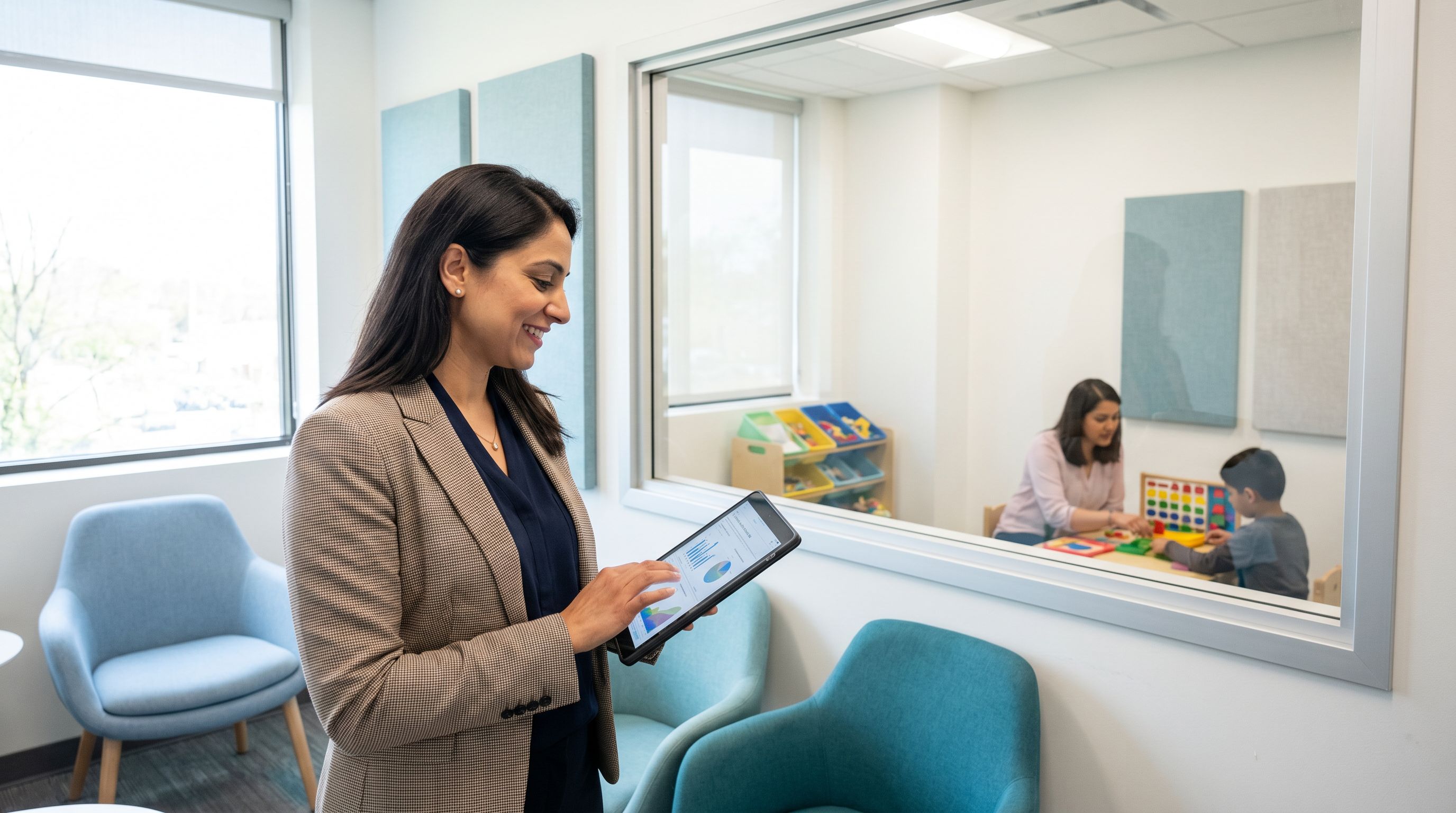

What does a BCBA do, exactly? A Board Certified Behavior Analyst designs behavior change programs, supervises therapy teams, and uses data to improve outcomes for people with autism and other behavioral challenges. It is one of the fastest-growing roles in healthcare. According to the BACB and Lightcast, employers posted 132,307 positions requiring BCBA certification in 2025, while only 83,586 BCBAs held active credentials. That gap makes the BCBA one of the most sought-after professionals in the country.
Whether you are exploring the career or already certified and evaluating your next move, this guide covers what BCBAs actually do every day, the settings where they work, and why the job market continues to tilt heavily in their favor.
Core BCBA Responsibilities
A BCBA's work centers on applying the science of behavior analysis to real-world problems. While the specific caseload varies by setting, most BCBAs share a common set of responsibilities.
Conduct functional behavior assessments (FBAs). Before designing any intervention, a BCBA identifies the function behind a client's behavior. Is a child engaging in aggression to escape demands, to gain attention, or to access a preferred item? The FBA answers that question with data, not guesswork.
Design behavior intervention plans (BIPs). Based on assessment results, the BCBA creates individualized treatment plans that outline replacement behaviors, reinforcement strategies, and crisis protocols. These plans are living documents; they get revised as data comes in.
Analyze behavioral data. Data analysis is the backbone of the role. BCBAs review session data daily or near-daily to track whether interventions are working, identify trends, and make adjustments. If the data shows a plateau, the BCBA modifies the approach rather than waiting to see if things improve on their own.
Supervise RBTs and BCaBAs. The BACB reports 253,397 active Registered Behavior Technicians as of early 2026. BCBAs oversee these frontline therapists, observing sessions, providing feedback, and ensuring treatment fidelity across their caseload.
Train caregivers and families. Behavior change does not stop at the clinic door. BCBAs teach parents, teachers, and caregivers how to implement strategies consistently across environments, a practice that research shows significantly improves long-term outcomes.
Collaborate across disciplines. BCBAs regularly coordinate with speech-language pathologists, occupational therapists, educators, and pediatricians to ensure treatment plans align with the client's broader goals.
A Day in the Life of a BCBA
No two days look identical, but most BCBAs follow a rhythm that balances direct client work, supervision, and administrative tasks.
Morning. The day often starts with a data review; checking graphs from recent sessions to flag any clients whose progress has stalled or accelerated. Many BCBAs also begin with a brief team huddle to align on daily priorities with their RBT team.
Mid-morning. Session observation is a core part of the schedule. The BCBA watches an RBT run a therapy session, takes notes on treatment fidelity, and provides coaching afterward. This is where supervision hours accumulate and where treatment quality is maintained.
Midday. Direct client work fills this block. The BCBA may conduct a new assessment, run a one-on-one session to probe skill acquisition targets, or perform a reassessment for a client approaching their six-month review.
Afternoon. Paperwork often dominates the back half of the day. BCBAs write progress reports, update treatment plans, and complete the insurance documentation that keeps services authorized. This administrative load is one of the most common surprises for new BCBAs.
Late afternoon. The day frequently ends with a parent training session or a coordination call with a school team. These meetings are where the BCBA translates clinical data into practical strategies that caregivers can use at home or in the classroom.
Where BCBAs Work: 5 Common Settings
One of the strengths of the BCBA credential is its versatility. The same skill set applies across multiple environments, each with a distinct rhythm and client population.
Clinic-Based
The most common setting. Clinics offer structured therapy rooms, observation areas, and a built-in team of RBTs and fellow BCBAs. The controlled environment makes it easier to manage materials and run structured programs, and having colleagues nearby helps with challenging behaviors. Clinic BCBAs typically carry a caseload of 6 to 12 clients.
Home-Based
Home-based BCBAs deliver services in the client's natural environment. This allows the BCBA to observe real-world triggers, family dynamics, and daily routines that may not surface in a clinic. The tradeoff is less structure and more travel between homes throughout the day.
School-Based
What does a BCBA do in a school? They consult on behavior plans for students, train teachers and paraprofessionals on ABA strategies, support IEP development, and implement group contingency systems. School-based BCBAs collaborate closely with special education teams and often work across multiple classrooms or even multiple buildings.
Telehealth and Remote
Telehealth expanded rapidly during COVID and has become a permanent part of the ABA landscape. Remote BCBAs typically focus on parent coaching, supervision of RBTs via video, and consultation services. Hybrid models that combine in-person and virtual sessions are increasingly common.
Hospital and Healthcare
In hospital settings, BCBAs assess patients whose behavioral challenges complicate medical care. This includes managing treatment resistance, self-injurious behavior, and aggression in inpatient settings. Hospital BCBAs often work alongside psychiatrists and nurses as part of interdisciplinary care teams.
The BCBA Employment Gap: Why Demand Far Exceeds Supply
The BCBA job market is not just strong; it is structurally undersupplied. The numbers tell a clear story.
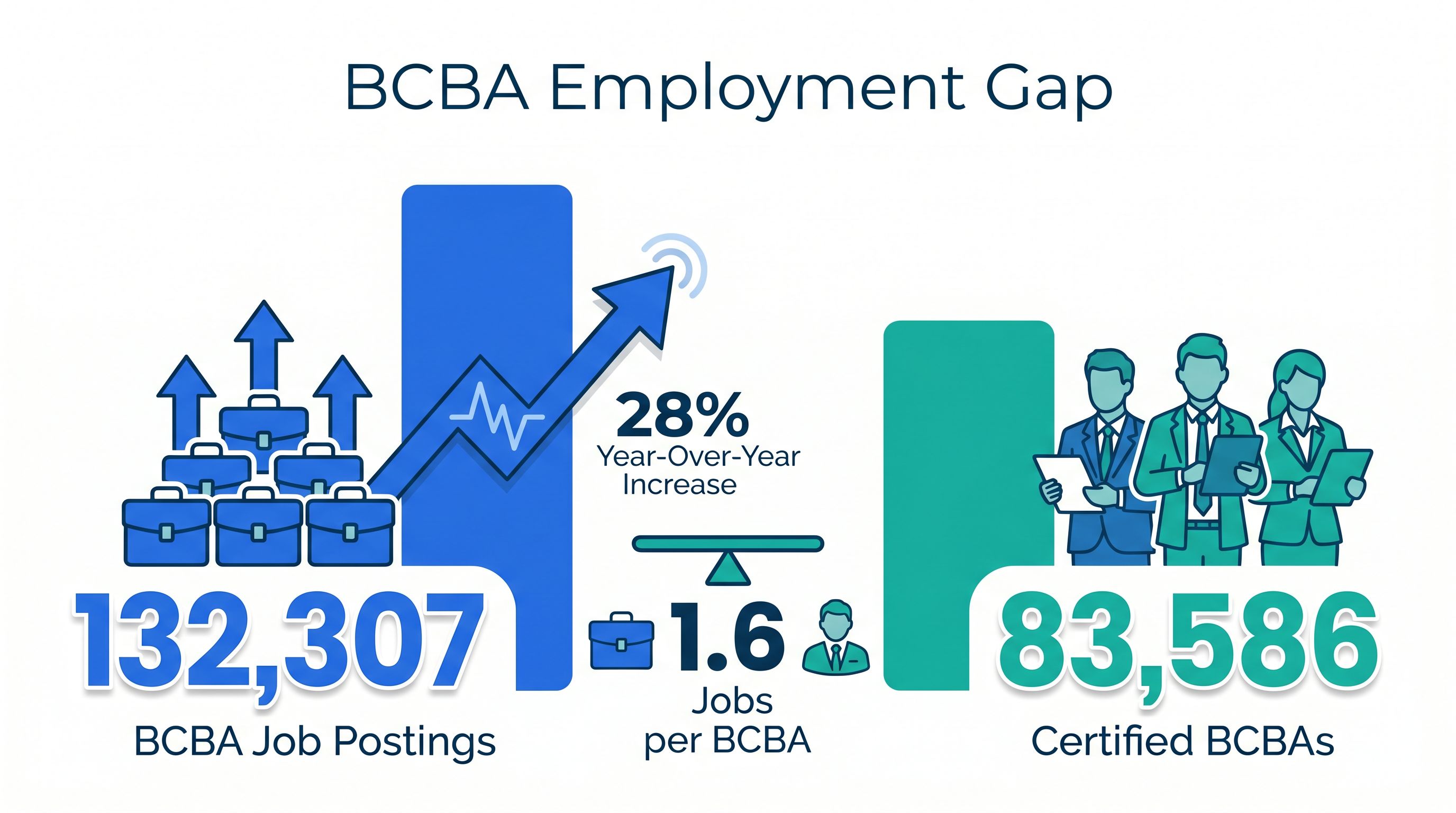
According to the BACB's analysis of Lightcast labor market data, employers posted 132,307 positions requiring BCBA or BCBA-D certification in 2025. That represents a 28% increase over 2024 and a 102% increase over 2023. Since 2017, BCBA job postings have grown at a compounded annual rate of 44.2%.
To put the growth in perspective: in 2010, there were just 789 BCBA job postings nationwide. Fifteen years later, that number has multiplied by more than 167 times.
Meanwhile, the supply side has not kept pace. The BACB reports 83,586 certified BCBAs as of early 2026. That creates a ratio of roughly 1.6 open positions for every certified BCBA, before accounting for professionals who are already employed and not actively job searching. The effective gap for employers trying to fill roles is significantly wider.
Demand is concentrated but widespread. Five states (California, New Jersey, Texas, Massachusetts, and North Carolina) account for 38% of all BCBA postings, with California alone representing 15% of national demand. But even states outside the top five consistently show more open positions than available BCBAs.
The Bureau of Labor Statistics projects 17% growth from 2024 to 2034 for the broader behavioral counselor category, well above the national average of roughly 4% for all occupations. Multiple forces are driving this: rising autism diagnosis rates, expanding state insurance mandates that require ABA coverage, and growing recognition that behavior analysis applies beyond autism to areas like organizational behavior, geriatrics, and education.
"With 1.6 open positions per certified BCBA and a 44.2% compounded annual growth rate in job postings, the employment gap is not closing any time soon."
How to Become a BCBA
Earning the BCBA credential requires a graduate degree, supervised clinical experience, and a certification exam. Here is the pathway at a glance.
- 1. Earn a master's degree from a program that includes BACB-approved coursework in behavior analysis. The degree can be in any field, but the coursework must meet the BACB's content requirements.
- 2. Complete supervised fieldwork. The standard pathway requires 2,000 hours of supervised experience. A concentrated pathway allows completion in 1,500 hours with a higher supervision ratio (7.5% vs. 5%).
- 3. Pass the BCBA certification exam. The exam includes 175 scored multiple-choice questions with a four-hour time limit.
- 4. Maintain your certification through continuing education units (CEUs) and ethical compliance with the BACB's Professional and Ethical Compliance Code.
The full process, from the start of undergraduate education through certification, typically takes six to ten years. For a detailed breakdown of each step, see our BCBA Certification Guide.
BCBA Salary and Career Outlook
The employment gap translates directly into strong compensation. According to ZipRecruiter, the national average BCBA salary is approximately $101,539 per year as of 2026. However, pay varies significantly based on setting, location, and experience.
The Bureau of Labor Statistics reports a median of $59,190 for the broader behavioral counselor category (SOC 21-1018), but BCBAs with specialized ABA credentials typically earn toward the upper end of that range and beyond. Clinical directors and senior BCBAs in high-demand markets can earn $120,000 or more.
Geographic variation is substantial. BCBAs in states like California, New Jersey, and Massachusetts consistently earn above the national average, partly due to higher costs of living and partly due to concentrated demand. For state-by-state data, see our BCBA Salary by State 2026 guide.
Career progression for BCBAs typically moves from direct clinical work to supervisory and leadership roles: lead BCBA, clinical director, regional director, or private practice owner. Some BCBAs also transition into non-clinical roles like insurance utilization review, organizational behavior management consulting, or university teaching.
Is a BCBA Career Right for You?
BCBAs sit at the intersection of clinical expertise and data-driven decision making. The role demands patience, analytical thinking, and genuine commitment to improving client outcomes. It also rewards those skills with exceptional job security, competitive pay, and the flexibility to work across a wide range of settings.
With 1.6 open positions per certified BCBA and demand growing at double-digit rates every year, the question for most BCBAs is not whether they can find a job. It is which opportunity best fits their career goals.
Take Control of Your BCBA Career
CertifyndABA is a reverse job marketplace where ABA professionals receive interview requests from employers based on qualifications, not personal information. Build your anonymous profile and let the right opportunities come to you.
Create Your Free Profile